 ЛОМАКС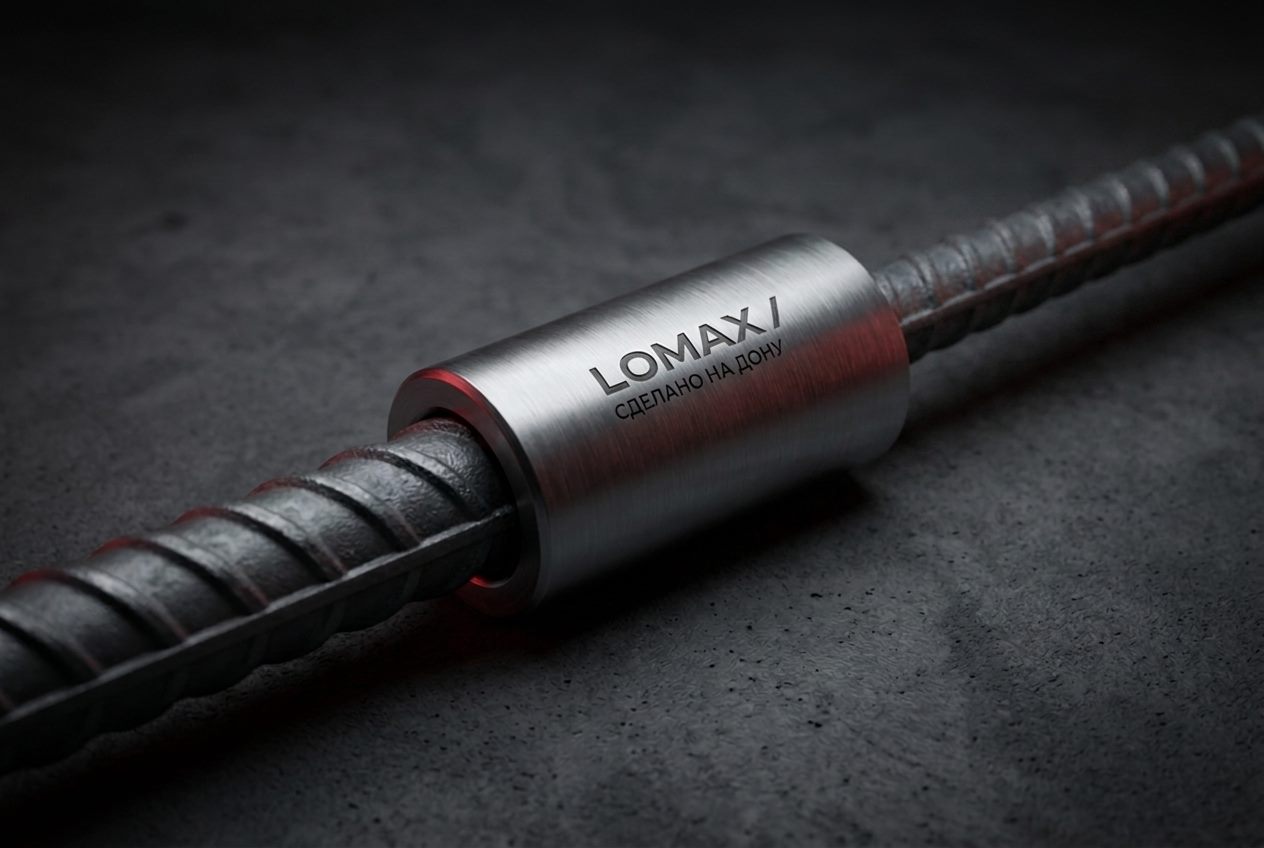
The Lomax transition rebar coupler joins two bars of different diameters without welding or lapping — a full-strength splice per GOST 34278-2024.
A threaded transition coupler joins two rebar bars of different diameters (Ø1 → Ø2). Available in cylindrical and tapered versions. Made by LOMAX, factory price, shipping across Russia and to the CIS.
Rebar section transition up the building height, joining columns with different reinforcement, tying to starter bars of a different diameter.
Diameter tables are on the typed pages: cylindrical, type AT and tapered, LX-CT.
A transition coupler joins two rebar bars of different diameters into a single full-strength splice. It is used when the rebar section changes over the building height (for example, from Ø32 to Ø25 in upper-floor columns), when tying to starter bars of a different diameter and when splicing dissimilar reinforcement.
Available in two versions: threaded cylindrical (Type AT) and tapered (LX-CT), for Ø12–40 mm rebar of classes A400/A500C. Installation with a wrench, without welding or lapping; the connection complies with GOST 34278-2024.
Exact dimensions and prices for each diameter combination — in the tables of the type pages Type AT and LX-CT. Splice requirements — in the article about GOST 34278-2024.